Interview with Fr Hans Zollner: Confronting the reality of abuse
By Catherine Sheehan – September 5, 2018
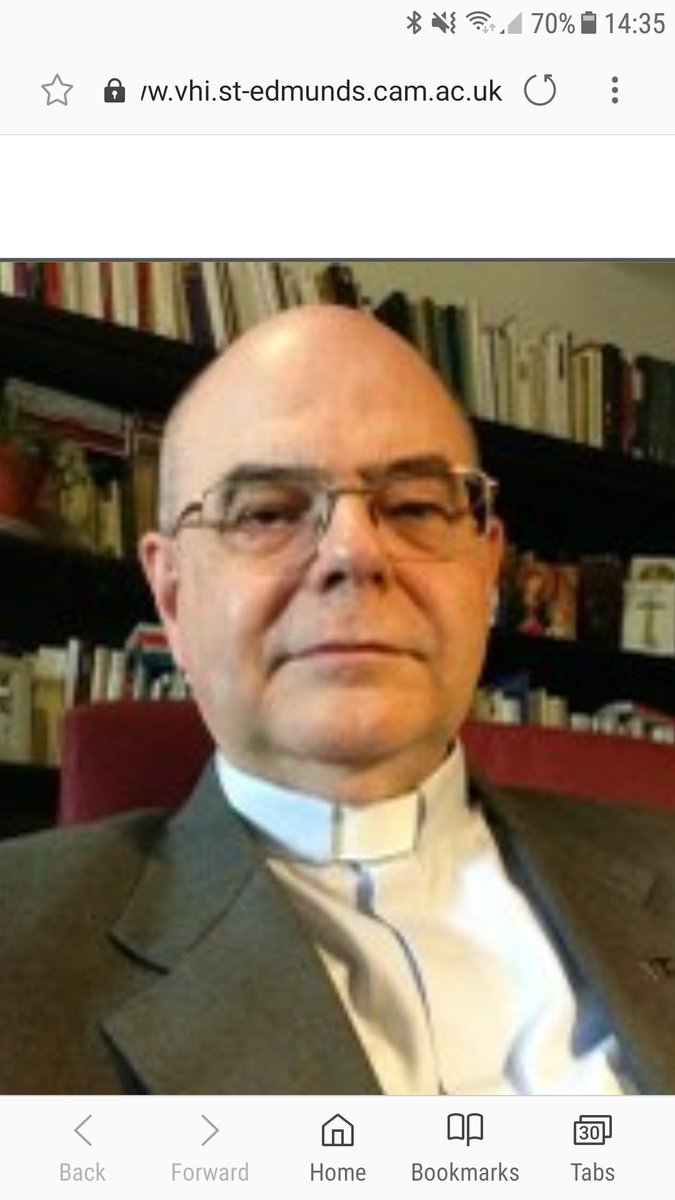
Father Hans Zollner SJ, President of the Centre for Child Protection at the Gregorian University in Rome and a member of the Pontifical Commission for the Protection of Minors, is the Vatican’s foremost expert on safeguarding minors. In Australia last week, he spoke to Catholic Weekly journalist, Catherine Sheehan, about what the Church has learned through the sex abuse crisis.
Fr Zollner, how extensive is child sexual abuse in the Catholic Church? For example, can you say what percentage of clergy or religious have abused?
There are very few reliable statistics and research being done. Only from a few countries. One is Australia, another one is the US, and maybe five other countries. The extent is more or less consistently of about three, to five, to six per cent of priests in a specific period of time, which relates mostly to what we know, where the research has taken place, from around 1950 to 2010. Whereas over the past 10 to 20 years, depending on the country, the numbers have dropped almost to nil. Of allegations referring to these last 10 to 20 years … where a church has decided to introduce Safeguarding measures, and codes of conduct, and guidelines to implement them … they work. And where information on Safeguarding are obligatory and supervision on that is mandatory, it works.
So the Church began implementing these measures ten years ago?
It was in 2002 in the US they introduced the so-called Dallas Charter, guidelines and mandatory information sessions every year. In Australia, as has been shown by the Royal Commission … in almost all dioceses the number of allegations referring to the current years, not 50 years ago or 30 years ago, is almost nil.
The impression is often given through the media that child sexual abuse is rife in the Catholic Church. Is it possible to say that it is more likely to take place in the Church as opposed to the wider society?
We cannot say it is more likely and people who say so can’t present statistics. For the simple fact that … There is no other institution, there is no other Christian denomination or religion, that has been investigated as thoroughly as the Catholic Church. So there is no real comparison to that. And even within professional groups, there is not research that would cover, for example, school teachers in public schools … psychologists, doctors, police, music or sports trainers. So we don’t have a reliable number for comparing the number of Catholic priests, especially if you talk about the whole population of one particular profession. We have also to acknowledge that by far most sexual abuse and of course physical abuse of minors happens in the family context. I … heard somebody who was involved in the Royal Commission’s proceedings [say] that they believe that 95 per cent of all abuse in Australia happens within the family context. Which means five per cent of all abuse happens in all institutions altogether, of which the Catholic Church is a part. Now this does not excuse the Catholic Church. Every single abuse that takes place is one too many. Every single abuse that is committed by Catholic clergy and other personnel in the Church is a horrendous crime and needs to be prosecuted and punished full stop.
So the amount of abuse perpetrated by clergy, religious or other Church personnel would be less than 5 per cent of the total amount of child sexual abuse in society?
No, 95 per cent [occurs] in [the] family context, in society at large. Five per cent in all institutions of which the Catholic Church is one part of. So all the public schools, all the psychologists would be in the 5 per cent.
Yes, so it would be less the 5 per cent?
Much less than 5 per cent.
Father, in your opinion, is the Catholic Church doing enough to address the problem of child sexual abuse?
We can’t ever do enough. But the Catholic Church in Australia has done a lot and is certainly among the top five in the world. If you come to the local churches, or bishop’s conferences in this country, you have all kinds of resources allocated money, personnel trained. You have officers established, you have information sessions running, you have conferences like this [one in the Diocese of Wollongong]. You have a response to the Royal Commission’s recommendations that accepts 98 per cent of all recommendations without any discussion and you have an atmosphere of willingness to really act upon what the Church asks … and what society asks it to do.
Speaking from your background as a psychologist, what do victims of child sexual abuse most need for their healing?
Most victims with whom I have met, to whom I have listened, say that the one thing that sticks out and that all they long for is being listened to, which is something that is easily said and not so easily done because it means that the listener, whoever that is, needs to be open, not only in his or her mind, but also in his or her heart and really empathise and understand the depth of the suffering of the person who shares that. Many survivors say they would like somebody in a Church hierarchical position to listen to them. Normally if the abuse has happened in a diocese they would ask the bishop, or for a religious congregation, the Provincial. Some don’t want to meet with any clergy anymore so it would need to be somebody else. But all concur in this, that the most important single element in a possible healing process, is being really listened to … all say this is the possible starting point.
Is it possible for someone who has suffered childhood sexual abuse to find healing?
I have seen victims who have come a long journey and who would say that they have been healed and have been reconciled which is another step. But this is not possible without the help of other human beings, mostly those who accompany, family and friends, in counseling and psychotherapy. Sometimes a good number of clergy sexual abuse [victims] say they have been helped in the spiritual journey of healing by priests or religious. What may surprise then but again they have found people who declare to being helped by clergy. This is not a journey that is possible for all but I have come across people who have said that they have been healed. And I can believe that.
What does sexual abuse do to a person?
Most of all it destroys the very basis of trust and that is the most important consequence of abuse. It destroys trust in oneself, in others, and in God. If the abuser is a priest or a religious or a person within the Church, that is the identification of anybody in that position. Then there are many questions that come around psychological disturbance, feelings of guilt. There is very often some conflicting emotions and attitudes towards sexuality and the question is, quite often, how can one put together one’s own identity, in terms of what am I worth and can I venture into a life that has been very often, very much harmed by such kind of abuse early on?
Why do you think these cases of sexual abuse in the Church are coming to light now, at this point in time? Do you think there have always been these crimes taking place in the Church but it’s only now that we are discovering them and the gravity of them?
We have not only now discovered it, it has been here in Australia in various waves, a topic within the Church. I’ve met a priest who had to deal with the first case in his career as somebody employed by the diocesan offices in 1977. But since then, that is 40 years now, in society and in the Church, much has changed and in my country we have started to speak about sexual abuse of minors in a public way, to a large extent only eight and a half years ago. There comes a point when people really start to talk about this because there is an openness to it [and because] certain taboos are gone …
What would you say are the main causes of child sexual abuse perpetrated by clergy and religious?
This is a question that you would have to answer with regard to all individual perpetrators. [There are] common factors … that people express by abusing minors especially a power differential. [For example,] me as a priest, I take what I wish, I take what I want and I am not accountable for what I do. I seek to express my superiority, which shows that psychologically speaking many of those who have abused feel themselves really weak interiorly. They may not appear to be weak but they feel … they cannot cope with an adult peer to peer relationship, they may not be able to face the opposite sex. So there may be all kinds of dynamics going on including unresolved issues about sexual identity and so forth.
Is there an element of perpetrators having been victims themselves in the past of childhood sexual abuse?
Now there is debate in science and conflicting figures about that. I personally think that there is a risk factor when one has been abused and literature speaks to that but it is not as high as people think. Not every body who has been abused becomes automatically an abuser. This has been proven to be wrong.
Do you see any evidence in the Church that people who abuse have themselves been abused?
There is no difference between people in the Church or outside the Church, no. As I say, there is a certain risk factor but the risk factor does not mean that necessarily somebody acts on that.
Do you see a diabolical element to all of this sexual abuse in the Church?
Certainly there are horrendous stories and you can’t believe that a priest would do something [like] what you hear and what has happened to really, that a priest would be capable of doing something like that. So there is an element of evil that goes way beyond human understanding and certainly there is something that has also a component of some evil presence in human beings that is not comprehensible.
Independent research from the US has shown that 81 per cent of victims of clergy sexual abuse are boys who are at the age of puberty or beyond. So would you say there is a homosexual element to the sex abuse crisis in the Church?
There is within the Church, the numbers are as they are, and they seem pretty much confirming what is actually going on, and what has been going on. I would say that the homosexuality first of all does not lead automatically to abusive behavior, that is clear. And I would add, from my experience and from what I’ve read, that not all people who have abused, not all priests, men, who have abused boys would identify themselves as homosexual. So they act out sexually but they would also have heterosexual tendencies, or they would not identify as clearly and uniquely homosexually oriented.
So there is much talk about this nowadays. Some would say that we have a certain proportion of homosexuals among clergy, that is clear now and we don’t need to deny that. And since they were not allowed to process that because [they] thought or they were told that they couldn’t speak out on that, this homosexuality was lingering on and then became manifest, not in same-sex relationships with peers, but rather with adolescent boys.
Is it therefore the Church’s policy to screen seminarians for homosexual tendencies?
Within the admission process of a seminary there is a psychological screening, at least I think that is in place all over this country and elsewhere. The point is not heterosexuality or homosexuality for such a screening, basically because the psychologist would rather not look into that but it is a question of how integrated the sexuality is, how healthy it is lived out or how immature the whole area of emotion, of relationships, of power, is lived out. Because sexuality is not a thing that is disconnected to the rest of the personality. To the contrary, it is very much present.
So even though such a high percentage of clergy sexual abuse has been against boys, that’s not reason enough to prevent someone with homosexual tendencies from entering the priesthood?
No, the Church has guidelines for that and it says that people who have deep-rooted homosexual tendencies should not be admitted to the seminary or to ordination. The question is what does “deep-rooted tendency” mean? That is not defined, certainly not by science. So there is a moment of discretion and you have to acknowledge that people who are homosexuals, or who define themselves as homosexual, are in priesthood. There is no need to deny that because it’s clear out there. The more important question is how do they live that? I think that a homosexual priest faces more challenges than a heterosexual, if only for the fact that he has to stand in for a doctrine that says homosexuality is not normal.
Would part of the problem be that boys are more accessible?
Yes of course, we see that, as I said, the period that was investigated in all these reports was around 1945, 1950 to 2010, or Royal Commission 2018, and until 20, 25 years ago, priests would also teach in boy’s schools, would have only altar boys and so forth.
One issue that came up here during the Royal Commission was mandatory celibacy. What’s your response to those who think mandatory celibacy is a contributing factor in the sex abuse crisis and should be abolished?
There is no causal effect between celibacy and child sexual abuse and the Royal Commission itself has stated so, that celibacy does not lead to abusive behavior in a mono-causal sense. It may become a risk factor when celibacy is not lived out well enough over years, then it may lead people to becoming abusers of alcohol, abusers of internet pornography, abusers of adults or abusers of minors. The point is that mandatory celibacy is not a dogma, it can be changed.
The point is that 99.9 per cent of all abusers do not live a celibate life. So the question is first of all, how do you deal with that fact? And secondly, 95 per cent of all priests are not abusers so celibacy obviously does not lead to abusive behavior as such, only over time and the time is quite long, meaning priests abuse for the first time, this is a scientifically established fact, at the age of 39. Which is much older than a trainer, a teacher, or a psychologist when they abuse for the first time which would be at the age of 25. So celibacy becomes a problem if it is not lived out, not integrated into a healthy lifestyle.
The Church here in Australia has come under fire from the media for rejecting the Royal Commission’s recommendation that it break the Seal of Confession for cases of child sexual abuse. It has been said that if the Church really wants to be transparent it needs to stop all the secrecy including the Seal of Confession. What’s your response to that?
They don’t listen to what has been said over and over again. How do I know who is confessing to me? I don’t know their name, that’s part of confession. So either you do away with all confession, and you have no confession anymore, or you have what confession presupposes, somebody comes there who I don’t know. So how would I know the name and be able to report that person? And if you take away that element of Confession, that I don’t know who is the person confessing to me, then the person will certainly not come to confess. And it is greatly exaggerated the number of people who would come to Confession. People think that every person, every Catholic goes to Confession every week. Far from that, who goes to Confession nowadays? I’ve heard many people, priests, say, and I can confirm that, in decades of being a priest, I’ve never ever heard one single confession of any perpetrator.
What about the role of clericalism in child sexual abuse and its cover up in the Church?
There is certainly a problem with clericalism, if you define clericalism as the way people define themselves and live more from the role and position they have rather than from their personality and their personal competence. I was very much surprised and very much enlightened by comments from lay people with whom I met over the last few days here, that they said clericalism is not only for clergy. Lay people also show clericalist attitudes and that is also a problem. When they cling to prestige and they measure their importance in the number of secretaries they have, the type of car they drive etc.
Another criticism of the Church in relation to the sex abuse crisis is that there are not many women in leadership roles. Do you think that would make a significant difference in regards to child sexual abuse?
I would say that women certainly can be, and have been, more included in leadership positions. The Pope himself has done do over the last years for very important positions in the Holy See. That will continue. I was also very much surprised to hear here during the conference, a woman speak up who said she had worked very much for gender equality but she would warn that by simply substituting men [with] women or by women, you solve the problem of power issues. That is not the case.
Father, you’ve said in other interviews that this sex abuse crisis is not a matter of Liberal vs Conservative Catholics. What did you mean by that?
In the US we have now a very strong debate, a great and ferocious discussion between Liberals and Conservatives that has been going on for a long time. But after the Vigano letter that has come up again over and over, it is an issue that concerns the whole Church. Apart from Church political parties, because we have abuses on either sides, and we have people who on either side for betterment, so it could be a bridge in the favour of creating a safer Church for children.
If the allegations against former Cardinal McCarrick are true, then would you say there must have been many in the hierarchy who knew and covered it up by not doing anything?
We need to know how many people knew really about the allegations. I guess it will be very few because clear allegations have been forwarded only to very few people. If you hear gossip, if you hear some hear-say, you are not necessarily in the full picture and that diminishes your responsibility for that. So I don’t think there will be many clearly indicted. There will be very few people who would have known precisely what were the allegations.
Do you give any credence to Archbishop Vigano’s testimony? Do you think it is worth investigating?
Yes it is worth investigating. I have seen many over the last days, many, many questions surfacing, putting his [Vigano’s] credibility to the test. In many respects the timing of the publication of the letter leaves open the question of what political interests brought it to be published precisely at that moment when the Pope was in Ireland wrapping up his visit there. So there are many open questions.
Did you think the Pope’s response to journalists that he wouldn’t say a word about it but that they should investigate was adequate given how much the faithful are hurting and confused because of the sex abuse crisis?
I think he tried to say, he said literally ‘for the moment I don’t want to speak to that. You journalists do your work, then I will come back to that.’ He invited [them] precisely to do what many ask journalists to do, and not trying to convince them [by saying] ‘I haven’t done any wrong and so forth’. I think in that sense, he has invited all of us to be alert and not simply believe what we read … Go and verify things. I have seen now there are a lots of articles that have taken the allegations of Archbishop Vigano to the test and there are many factual errors, many omissions in the letter, there are many other open questions with regard to that and I hope, as all of us, that the Pope or the Holy See will reply.
What is the key to preventing this sex abuse crisis from happening again?
The key is that people become aware of abuse is happening, that they speak out and that they are informed to whom they can report. And then that the due process is being followed through. I would like to warn against the [impression] that it will be over once and for all. This would be from my point of view a dangerous illusion because evil will be with us and we will not be able to exclude abuse from happening simply because we introduce new guidelines. This is a necessary and very important step but not a sufficient one in the sense that we will never be able to exclude somebody abusing another person.
That’s why we will need to continue education and dissemination of information about reporting etc. and that is the work of the Centre for Child Protection of the Gregorian University of which I am the President. We have online training programs, we have residential programs for future safeguarding officers and this is the way we believe the change can come about.
ENDS


 Comboni Missionaries