Writing and Posting on the Blog ……….. Mark Murray

Hello all,

Apparently, there appears to be some confusion about who it is that is writing, and then publishing the comments and posts on the Mirfield Blog.

Myself, as an administrator of the blog, alongside Kevin and Tony Edwards, who are also administrators, are the only people that can publish comments and postings. All postings and comments are seen by one of us before we add them to the blog.

Even though the posting may say, for example, “Posted on 6 January 2014 by Mark Murray” it does not indicate that I am the author of the post, only that I posted it on behalf of the author. For that reason we try to include in the title of the posting; the authors name, and a brief synopsis of his or her posting.

Regards,

Mark

Aidan B. ——— “I wonder if anyone recalls me?”

Hello

I’m wondering if my email can please be posted on the blog/website?

My name is Aidan, I was at Mirfield for a year in 1966. My problem is that I have so few memories of that experience and anything before it. There is a blackness when I try to think about it but I feel that it’s an emotion rather than a thought. I recall few people and cannot put faces to anyone really. Reading through the various posts I recognise names. I was in the same dormitory as Eamon Crowe and a boy called Ian. I remember travelling by train with a boy called Michael. he got off a tDurham and I continued to Newcastle. I recall Fr Hicks. I certainly recall Fr Valmaggio as I was often in the infirmary with asthma. I recall Stenico and Latin, I think.

I am hoping i can be provided with some facts. I believe that the infirmary and Valmaggio’s clinic were in the old building. Were they on the top floor? I ask because of the few memories I have, I recall a frightening attic. I can see African things in there but it’s not a happy memory that I have. I went back to Mirfield a few years ago to see if I could try to gain some memories. It didn’t work. I did see a new slanting roof.

I wonder if anyone recalls me?

What was the name of the rector please? What did Father Wade look like?

Many thanks and best wishes

Aidan B

William (Bill) Stewart – “just stumbled accross this blog”

Just stumbles across the “Mirfield Memories/Childhood I the hands of the Verona fathers website/blog.

Interesting and saddened by the stories written, I am now a middle aged man on a reflective gauntlet. I was there only for 1 term from Sept 1975 to Christmas 1975- not long. The sufficient trauma of trying to make Priests out of 11 year old boys was as unacceptable then as it is now in the light of adult consciousness.

My name is William (Bill) Stewart and from/still in Scotland. If anyone is likely to remember me, I’d like to hear from them.

Thanks

Bill

Martin Millar – Another Mirfield yarn…..

Dear MOBsters

Salve a tutti from your Edinburgh man in Oxford (Martin Millar 68-72). Aidan, I hope you’ll enjoy this post – hold fast. Eamon, keep it together. Mark keep up the good fight. Degs, thanks for keeping the blog going.

Frankie’s piece (The Start) made me smile as I thought about the people he shared the carriage with – boys that would become my good friends. I thought of the start of my own Mirfield adventure, standing on the platform in Waverley station with my tearful Mum, and wanting to get on the train and leave. I had strong reasons. This was my chance to escape.

What I was escaping is a subject for another occasion. I’m spending a dull afternoon at home getting over a cold and ignoring the pile of scripts I could be marking. One of the things to do when you’re bored and lacking the motivation to do very much else is blog. This website is nice and friendly and so far, troll-free, it would seem. Anyway, here’s a yarn from my days at Mirfield.

I reckon this must have been September, 1971. Russell was in charge. He had arrived in July, and I was living in the college on my own, having been given special permission to do so. (I had got myself a job as a wine waiter in The Three Nuns restaurant). Our paths hardly crossed and I was keen to stay out of his way, as he was known to hate long hair – a privilege that we had won after years of argument with Fraser and Hierons. On my afternoons off, I would sometimes go into the library to play the piano, and one day, a woman came in. She was a librarian and had been hired to sort the place out. After a few minutes of pleasant chat, Russell suddenly barged in and told me to get out and not to come back until I had a short back and sides. I can still remember the embarrassment, not just mine, but hers too. So off I went to the barber’s – a cool dude that we all liked, whose shop was on the edge of Mirfield, down Slipper Lane. So I was the first victim of the Wrath of Russell…..

A few days later, boys came back from the summer hols, and were all given the same message : haircut or expulsion. Ambrose Mulroy arrived very late. We were in the chapel for Mass and he came in, genuflected, and sat down near me. His hair was down to his shoulders. He could see from my face as well as the short hair on my head and everybody else’s, that something was up. As soon as Mass was over, and we were outside in the corridor, Russell’s stentorian voice bellowed out: “Mulroy! Get out and get a haircut or don’t come back”. We filed down to the refectory in stunned silence. Ambrose went off on his own just as it was starting to get dark.
The rest of us were thinking how the hell he was going to get a haircut at 8 o clock at night…

This what Ambrose told us the next day, his long locks gone, and his hands and face covered with scratches.

He had gone to the barber’s, knocked and knocked as loud and as long as it took. The barber emerged as if from what Ambrose read as coitus interruptus, dishevelled and mightily pissed-off. “Piss off!”
“I can’t! You have to give me a haircut or I’ll get kicked out!”.

The barber obliged, and Ambrose set off back to Roehead. Somewhere near the Secondary Modern, he came across a bunch of local yobs out for a bit of bovver. Ambrose fled for his life, jumping and vaulting over fences and putting enough distance between himself and his pursuers to think he was in the clear. He then got into even worse trouble when he ran into the drunks coming out of the Star. He turned tail and fled again praying that the Mirfield yobs had given up. Taking a risk, he dived for cover in the bushes near one of the lanes near the pub. The drunks had split up to search for him, knowing exactly where to block his escape back to the college. He lay there for several minutes and could hear them closing in. “Fookin counts, that lot. Fookin Irish and Scots coonts. A’s’l kick ‘is fookin ‘ead in”. One youth stopped directly over him. Ambrose told us how the drips of the guy’s urine slid down the leaves and how he had to use all of his powers of self-control not to stir, in spite of his revulsion.

Eventually, the yobs got bored and left. Ambrose picked himself up and stealthily made his way back to the college. We were all in bed and I think he had to ring the front door bell to get in. If my memory serves me right, I think It was one of the other fathers who let him in, and not Russell…..

We had already developed strategies to elude yobs, and we would continue to deploy these throughout our time at Mirfield as well as beyond. Russell’s tyranny was a new threat however and would prompt the development of creative resistance strategies….

And to finish, I want to make a request for other yarns.

At the April 2013 re-union, Degs and Mark told amazing stories about taming crows. I really want to see these told here.

With brotherly love to all.

Sent from my iPad

Scottish bishops’ secret sex abuse file handed over to police

Former adviser hits back at Catholic church’s ‘pious words’ on scandal

Catherine Deveney

The Observer, Saturday 23 November 2013 23.37 GMT

Church unveil new archbishop-elect of St Andrews and Edinburgh
Archbishop Leo Cushley: “sympathises, but unable to assist” over abuse claims Photograph: David Cheskin/PA

A confidential file of letters from Scottish bishops detailing more than 20 secret abuse cases has been handed to police by a former safeguarding adviser to the Catholic church.

The intervention by Alan Draper, a former adviser to the Motherwell diocese, comes as the church attempts to draw a line under unfolding sex-abuse scandals by announcing a series of measures to be read at all masses this weekend on behalf of the Scottish bishops. However, describing the initiatives as a “charade”, Draper says it is time for criminal investigations and an independent Scottish government inquiry into sexual abuse in the church.

The letters, dating back to 1995, include every Scottish diocese. One bishop, who describes abuse against “two severely mentally-handicapped young female adults”, asks Draper to destroy his letter after reading it. Another refers to an abused child as a “young female parishioner”. while a 15-year-old boy is described as “sexually mature”.

A Catholic media spokesman, Peter Kearney, said the church would co-operate fully with the police, but added: “If someone has been in possession of material which they felt showed criminal behaviour, they would be expected to explain why they had taken 18 years to hand it to the authorities.”

“The letters were given to me in confidence, and for a long time I respected that,” explains Draper. “But the church has failed to reach out to victims and I have felt increasingly frustrated with their inability to manage the situation. It’s a matter of public interest that the file be revealed.”

Draper, a former deputy director of social work and a retired senior lecturer in medical ethics, says that both the tone and substance of this weekend’s church statement on abuse confirmed his conviction that he should release the file: “It’s pious words. It says the church recognises the trauma and pain of survivors. How are they doing that? Where’s the evidence of justice and healing? They talk about supporting those who have been harmed. Where’s the support? If anyone attempts to sue the church, the attitude turns adversarial and the lawyers and insurance people say no.”

The statement outlines three initiatives: the publication of a diocesan safeguarding audit between 2006 and 2012; an external review of safeguarding procedures by the Very Rev Andrew McLellan, former moderator of the General Assembly of the Church of Scotland and a former chief inspector of prisons; and a statistical review of all historic cases of abuse from 1947 to 2005.

“It’s all statistics,” says Draper. “It’s not a forensic audit which would open up their files and look at cases. Most of it is to be done by appointees of the diocese who rely on the patronage of the bishop. The ‘independent’ bit is being done by Andrew McLellan and, while I’m sure he’s a fine human being, how is he qualified? It should be conducted by three experts in the field, whose independence and integrity are beyond reproach.”

The statement insists that McLellan’s review will “be seen as an endorsement of our safeguarding service”.

Kearney insists that the historic audit will look at how cases were dealt with and says McLellan is “an eminent and respected figure with an exemplary record of public service”.

However, the bishops’ statement has ignited debate about the gulf between the church’s public statements and private actions.

“It’s only words,” says Father Gerry Magee of St Winin’s in Kilwinning, Ayrshire. “Nothing is being done. I have an abuse victim in my parish and, despite being publicly named, not one person has contacted him.” Another Scottish priest said: “It’s disgraceful. Nowhere in that statement is the word ‘sorry’ used.”

In August, Hugh Gilbert, bishop of Aberdeen, made a public apology for abuse suffered at Fort Augustus boarding school, saying: “We are anxious … that all that can be done should be done for victims.”

Last month he wrote to David Greenwood, the solicitor for a Fort Augustus abuse victim, Andrew Lavery, saying: “The diocese of Aberdeen has no liability.” In a stinging rebuke, Greenwood replied: “The tone of your letter … illustrates the callous nature in which the bishops of Scotland have treated victims of sexual abuse by their priests.”

Survivors are still concerned by the lack of care and transparency in the church’s approach. Pat McEwan, whose abuse case was highlighted by the Observer, received a letter from the church’s national safeguarding co-ordinator, Tina Campbell, criticising him for talking to the media.

Last month, James McDermott wrote to the newly-appointed Archbishop of St Andrews and Edinburgh, Leo Cushley, about abuse he suffered while at Sacred Heart primary school in Glasgow. Cushley’s assistant replied: “While the archbishop sympathises with your situation, he regrets that he is unable to assist you.”

“New face, same old song,” says McDermott.

Draper says that this “un-Christian attitude” contrasts with the church’s traditional protection of abusers, who have been given therapy and financial assistance, adding: “The latest statement makes no mention of assessing what support has been provided to survivors. It is window dressing yet again. They have learned nothing.”

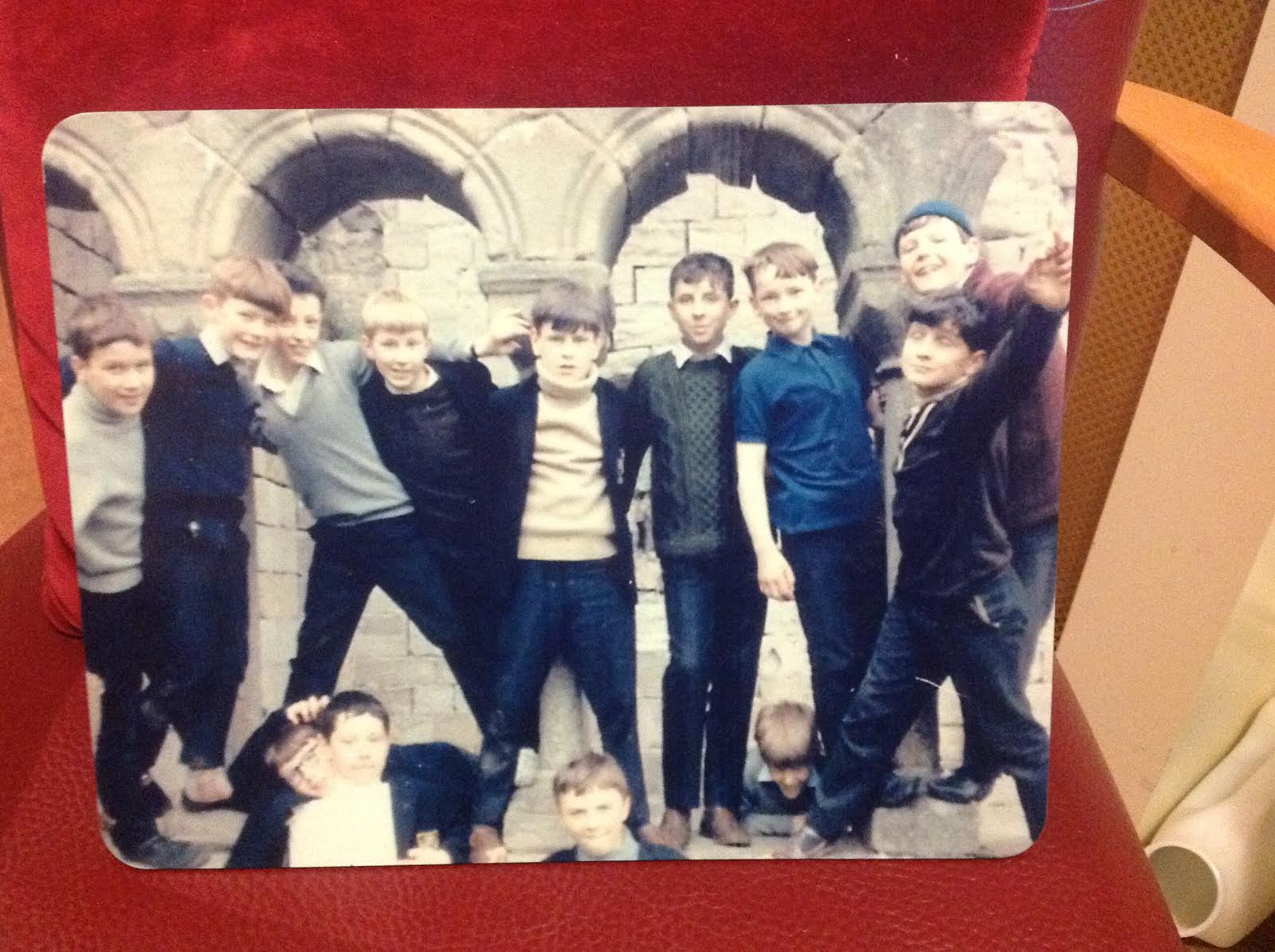
A Message from Aidan (Dono) Donovan

Hi guys,

just a short note to say a huge thanks for all the best wishes and kind thoughts that have reached me, and for so many of you who have been to visit me here at Meadbank.

If any of you want to send a message via the blog, my family will make sure I get to see the messages. It is a great source of strength to me to know that even after all these years, the MOBS are still in touch.

Kind Regards to all

Aidan (Dono) Donovan

Sent from my iPad