DAVID KINNEAR GLENDAY – THE SCOT – TAX COLLECTOR OR PHARISEE? By Brian Mark Hennessy

THE SCOT – TAX COLLECTOR OR PHARISEE?   By Brian Mark Hennessy

The Scot, as Father David Kinnear Glenday is often called, was once just plain “David” to me, a likeable, witty classmate and a friend. We were last together at the Comboni Missionary Order’s seminary at Mirfield in Yorkshire, England, in the 1960s. We have had quite different lives since those days. David went on to become a Comboni Missionary priest in Uganda. At various times, he was also the United Kingdom’s Provincial Superior, the Provincial Superior of the Order in the Philippines Province, the Superior General of the Order – and latterly the General Secretary of the Union of Superiors General in Rome. The Scot now spends a good deal of his time giving lectures and sermons and arranging and attending conferences. The gregarious, chummy personality that once he was as a youth has clearly been sustained and, undoubtedly, he is most suitable for his current role.

My life was different. I was sexually abused by a priest at the Mirfield Seminary at the time David was also there. I was locked into the infirmary and seriously assaulted twice a day for a fortnight under the pretence of “medical inspections”. I do not know whether or not David was abused in those years. It is not impossible that he was – for countless boys were abused by that priest from the 1950s until 1969 – when the continuous reports of abused seminarians had become so great in number that the Order eventually decided to do something about it. The only punishment for the priest who abused me and so many others for more than a decade was the prize of being sent to an Italian parish in the diocese of Como, Italy, where, presumably, he had access to even more children.

There were other Comboni Missionaries who also abused seminarians in that establishment– as both David and I well know. Their only punishment was being sent to the Missions in Africa where, presumably, they also continued, unchecked and unfettered, their abuse of yet countless other children. Who knows how many other priests of the Order were abusing children in those days – but one thing is certain, the local Provincial, the Vicar General and the Superior General of the Order did know. David Glenday, when he was both a Provincial and when he was Superior General would certainly have known also as he would have had access to the Order’s “Secret Archive” which is held at both the provincial and curia locations of the Order.

In my career, I became a Civil Servant, a Royal Air Force Officer, cultivated my vines, almond and olive trees in Cyprus for a couple of decades, trained German Pointer gundogs and then worked for an international company in London Docklands. Like David, I did end up in the Philippines for some five years also, but not at the same time as him. It all sounds good, but my life was somewhat tumultuous internally as I continuously tried to make sense of it. My path in life was quite different from that of David, but strangely they were also linked at the opposite ends of the same spectrum of the Comboni Order’s history of clerical sexual abuse. They are also paths, which in the half century since we last met, have never veered close to, nor been able to come to terms with each other.

Nevertheless, whilst not having met David since we were school-friends, I follow the comings and goings of the Scot on the internet fairly often and have noticed that he has themes in his events and sermons that he likes to go back to now and then. One is Luke 18:9-14, the parable of the Pharisee and the Tax Collector:

 “Two men went up to the temple to pray, one a Pharisee and the other a tax collector.  The Pharisee stood by himself and prayed: ‘God, I thank you that I am not like other people—robbers, evil-doers, adulterers—or even like this tax collector. I fast twice a week and give a tenth of all I get.’ But the tax collector stood at a distance. He would not even look up to heaven, but beat his breast and said, ‘God, have mercy on me, a sinner.’ Christ said, “I tell you that this tax collector, rather than the Pharisee, went home justified before God. For all those who exalt themselves will be humbled, and those who humble themselves will be exalted.”

I sometimes wonder to myself which of these two men does David think that he is: the humble tax gatherer or the arrogant Pharisee. He cannot be both – at least, not at the same time. Of course I would not presume to judge what is in David’s heart and soul – only the Scot can do that. However, I do know many of the things that David – and also his confreres in the Comboni Missionary Order have said and done when confronted with allegations of child sexual abuse. It follows that that same question – are you the Pharisee or the Tax Gatherer – must be posed, not only to David, but to his confreres also. I have to caution David that he and his colleagues must give themselves an honest answer and that to do so, they must recall their individual record where it comes to Child Sexual Abuse. To assist those entwined in this story, I recount the following passages, made by Comboni Missionary spokespersons, from the United Kingdom press for their reflection: –

> “We are concerned and very dismayed to hear of the alleged incidents of sexual and physical abuse”. (Dewsbury Reporter Sep 2013).

> “We have great sadness and regret at the allegations. Given the passage of time of almost half a century, we will never know the truth of what happened”. (Huddersfield Daily Examiner Oct 2014, BBC Leeds and West Yorkshire Oct 2014)

> “There was no evidence of a culture of abuse at the Mirfield seminary”. (Observer Oct 2014)

> “There are priests alive today who were at Mirfield at the time of the alleged abuse, but they have no knowledge of the abuse”. (Observer Oct 2014)

> “The abuse had not been proven”. (BBC Leeds and West Yorkshire Oct 2014)

> “As the allegations related to matters alleged to have occurred around fifty years ago – and the Verona Fathers are unable to identify their insurers from that period – having received legal advice, they decided to explore whether an early negotiated settlement of the claims may be possible in order to keep legal costs to a minimum”. (Greenock Telegraph Nov 2014).

> “We are dismayed by allegations of abuse and have co-operated with Police enquiries – but will not acknowledge that any of the men had been abused despite damages having been awarded”. (Mail On-Line Feb 2015).

> “We know that anyone subjected to abusive behaviour will experience suffering and we are dismayed to think that such suffering may have been caused to youngsters who attended our junior seminary. If that is the case, we are deeply sorry to anyone who has been hurt in this way”. ( The Observer Oct 2014, Mail On-Line Feb 2015)

> “Everything happened an incredibly long time ago and two of the priests who were accused are now deceased. My clients simply don’t know what happened at Mirfield and don’t feel that it can be established now. – There are three other pending cases of alleged sexual abuse of Mirfield pupils by priests”. (The Telegraph, 14th May 2015)

> “It was with great sadness and regret that the Verona Fathers learned that a number of allegations of historical abuse had been made relating to our former junior seminary, St Peter’s, located in Mirfield, West Yorkshire. We condemn unreservedly any action which causes harm or distress to others, particularly children. We know that anyone subjected to abusive behaviour will experience suffering and we are dismayed to think that such suffering may have been caused to youngsters who attended our junior seminary. If that is the case, we are deeply sorry to anyone who was hurt whilst they were in our care at Mirfield and our thoughts and prayers are with them and their families.” ( The Telegraph, 14th May 2015)

Well the average reader might think, that those comments all sound pretty reasonable for the most part. The problem is that those carefully constructed and sanitized words were dished up for the press to deliberately suggest the Order’s total ignorance and hence, reasonable denial of the abuse. Their deep sorrow “if” it had ever happened suggests that it might not have done. Without saying so directly, those statements also suggested that the Victims of the abuse might be dishonest. However, those Victims know that their accounts of the abuse are true simply because it happened to them – and there are things in life that you do not forget however many years have intervened. Moreover, yes, there may be priests alive today in the Order who were at Mirfield at the time of the abuse who knew nothing of the abuse. That statement to the press was nothing other than a wily subterfuge for there are also priests alive today in the Order who were at Mirfield at the time of the abuse, or soon afterwards, who do know of the abuse and have admitted that they had been told of the abuse! The most stunning miss-match in all those words to the press is that the Order has never actually and directly expressed to the very victims of that abuse their apparent dismay, regret and sorrow for all the suffering and hurt that was inflicted upon them. The Comboni Order has maintained absolute and impregnable silence on such sentiments and have refused all attempts to have a dialogue. There is more yet that must be considered:

> In 1996, following the initial allegations made by a Victim against Father Romano Nardo, a letter was received by his Solicitors from the Comboni Missionary Order to the effect that “the Comboni Missionary Order regarded that they had no legal obligation to compensate the Victim “even if they were minded to do so” because they were prevented from doing so by Charity Commission Rules and that the (United Kingdom) Taxpayers should compensate him.

> In 1997, a Victim received a letter from the Comboni Missionary Order through his solicitors, in which it was conveyed that an Inquiry had taken place and that it had found that the priest alleged to have committed sexual abuse had “acted inappropriately” and that he had expressed regret for the hurt caused to the Victim and had admitted the allegations. Incredibly, the letter from the Verona Fathers’ Solicitors, also announced that the Verona Fathers nevertheless felt that the abuser would be able to return to active ministry in Africa in only a month.

>The words “acted inappropriately” above were David Glenday’s euphemism for the priest’s washing of the 13 year old boy’s naked genitals in a “baptismal rite”, sharing the priests bed nightly and laying upon the priest’s naked body followed by the ritual of the priest breathing the life of the “Spirit” into the boy’s open mouth. This too was in the same room that the priest routinely heard the boy’s confession – and the same room where, on one deeply sacrilegious occasion, punishable with the greatest severity under Canon Law, that the same priest placed his stole around the boy’s neck as the priest confessed to the boy….and I almost forgot, in the midst of this sordid story, the horror the boy experienced when the priest first stripped naked in front of him and the boy was confronted by the scars of a crucifix that had been carved by a sharp instrument into the priest’s naked torso – and which the young boy later tried to emulate himself so as to be closer to the God of this priest.

> In 1999, a Victim informed the West Yorkshire Police of the sexual abuse that had been committed against him by a Comboni Order priest. In response to a letter from the West Yorkshire Police to the Order, the Solicitors, speaking on behalf of the Comboni Missionary Order, stated that the priest, previously fit enough “to return to active ministry in Africa in only a month”, could not now travel to the UK “as he is worn out by many years working in Africa”. Strangely, this inability to travel, did not stop that same priest from travelling long distances to attend church ceremonies within Italy that would have taken far longer than a flight to the United Kingdom. The Order maintained also that this priest was psychologically unable to face the “prospect of a protracted police investigation.” That in itself is no excuse under European law for not travelling to be questioned for alleged sexual offences against children, nevertheless, this Italian Order is able to hide behind the Italian statute of limitations for those alleged offences. I should point out, however, that the Order is bound by their own Code of Conduct and Canon Law to report the sexual abuses by this priest to the Vatican, but they appear not to have done so.

> In 2001, a Victim expressed to the Comboni Missionary Order his wish to meet his abuser in a spirit of conciliation. In a letter from Father Martin Devenish on 11 December 2001, the Victim was informed that his Abuser’s psychologist “felt it would not be convenient to receive the Victim”. In that letter, Father Devenish also stated, without having been asked, that the Comboni Missionaries were a “Mendicant Order” and were too poor to pay costs. (The total assets of the Order in some 40 or so countries have been calculated, nevertheless, to be well in excess of 500,000,000 Pounds Sterling).

> In 2006, a Victim of Father Domenico Valmaggia, wrote to the Comboni Missionary Provincial in an effort to trace Father Valmaggia. He received no reply and so he rang the Provincial Superior, Father John Troy, who said that Father Valmaggia was old and most probably dead. The Victim was provided with no assitance to trace Father Valmaggia by Father John Troy in 2006. At that time, documentation regarding Father Valmaggia existed at both the Provincial and the Roman Curia levels. The inaction of Father John Troy in this regard, at a time when Father Valmaggia was still alive, led to the failure of the Victim to be able to meet Valmaggia, discuss the abuse and record his responses in evidence. Father Valmaggia’s location was known to the Order, however, and when he subsequently died in 2011, his death was published in an official document of the Order.

> In 2010, following a meeting of a Victim with the Safeguarding Co-ordinator of the Wrexham Diocese, the latter agreed to arrange a meeting with Father John Clark, who was, at that time, nominated as the UK Comboni Missionary Safeguarding Co-Ordinator. The purpose was for the Victim to seek an acknowledgement that the abuse had taken place and to obtain a formal apology. The meeting subsequently took place and Father John Clark agreed that such a letter of acknowledgement of the abuse and an apology would be forthcoming and that he would consult Father Martin Devenish on the matter. No letter conveying an apology or acknowledgement was ever received. A letter was received from the Superior General of the Comboni Missionary Order later in 2010, however, in which he unconcernedly conveyed little other than “at the end of the day, we are all in God’s hands.”

> In 2011, a Victim of abuse went to Rome to see members of the Curia personally to report the abuses perpetrated against him. The Victim claims that he informed both the Vicar General of the Order, Father Alberto Pelluchi and the General Bursar of the Order, Dr Brother Danielle Giusti. Subsequently, in November 2011, the Victim received a letter from Father Alberto Pelluchi stating that the Order denied all knowledge of any abuse perpetrated at the Mirfield Seminary and noted specifically that Father Robert Hicks, Father John Clark and Mr J M McGovern had stated that they had no knowledge of any cases of abuse. The letter went on to say that Father Pelluchi had conducted a full and exhaustive investigation into the allegations at Mirfield made by the Victim, but that he had never heard or known of any cases of abuse in the Order “ever”, and that the Victim was clearly “deluded”.

> In February 2012, a Victim of abuse by both Fathers Valmaggia and Pinkman, wrote to Father Devenish, the Provincial Superior of the Comboni Missionary Order. He received no reply and so he wrote again in November 2012. He received a response from Father Martin Devenish eventually on 13th December 2012 in which the latter stated that Father Fraser “categorically” denied being informed about or was aware of any allegations of abuse by Father Pinkman. (Nevertheless, Father Fraser has admitted in a conversation that he did learn of Father Pinkman’s abuse later).

> Also in February 2012, that same Victim of abuse by both Fathers Valmaggia and Pinkman, informed Father Devenish, the Provincial Superior of the Comboni Missionary Order, that he had told Father Hicks of his abuse during confession. Father Devenish stated that Father Hicks “vehemently” denied a knowledge of any allegation against Father Pinkman. (Yet again, Father Hicks had already stated in a separate conversation that he knew of abuse by Father Pinkman).

> In 2013, a Victim received a letter from Kathy Perrin , Solicitor, on behalf of the Comboni Missionary Order, in which she attempted to dissuade him from taking action by communicating that “I note you intend to make a report to the police …However such an investigation may be difficult in this case given Fathers Pinkman and Valmaggia are deceased”.

> In 2014, a Victim of both Fathers Domenico Valmaggia and John Pinkman, tried to establish dialogue with the Order on behalf of the “Mirfield 12” group of Victims. During the discussion, it was suggested by Father Robert Hicks that the sole reason for the allegations of abuse by the “Mirfield 12” was to extract money from the Comboni Missionary Order”.

> In 2014 a Victim, in a state of despair, wrote: “ I have done enough striving and fighting for justice. I am tired of the whole sordid mess. It was in this vein that I rang Rome and asked to speak with Sanchez, the Superior General of the Comboni Missionary Order. I explained to the receptionist and then a priest, who I was. I was then informed a couple of minutes later that Sanchez would ring me back. The call never came. I rang again and once again was informed he would ring me back. The call never came. I rang back a third time and was told that he was out. I asked to speak to a priest that spoke English and the phone was put down on me. It was subsequently put down on me the several calls that I made after that”. Being ignored and having the phone put down on me came across as insulting – and I became quite emotional. I had built myself up to offer a hand of peace – an opportunity to leave all this behind, an opportunity to meet Nardo (the Victim’s abuser), and I suspect that there are people who would never understand this – but an opportunity to offer forgiveness to him. That never happened. I was shut out once again.”

> A Victim, following his attempts to contact the Superior General Sanchez of the Order, made a telephone call to Father Robert Hicks in 2014. He thought “naively”, he recollects, that if he explained to Father Hicks his intentions, that he would relay them to Sanchez. Father Hicks made it clear that he could not talk to him and the Victim was told, “I am not allowed to talk to you and that anyway my dinner is on the table and is going cold”. When the Victim protested that he was trying to extend a hand of friendship to the Order, Father Robert Hicks said that he should ring back and speak to Father Martin Devenish, the Provincial Superior.

> A Victim, in a telephone call in 2014 to Father David Glenday, who fills a post at the Vatican, was told by the latter that he was not allowed to talk to him, with the words, “I can listen, but I cannot answer”.

> A Victim in a telephone call in 2014 to Father Martin Devenish was told by the latter that if the Victim rang him again, he would be reported to the Police for harassment.

> At the end of 2014, A Victim, who at the time of writing, is in the process of litigation against the Comboni Missionary Order Priest who relentlessly abused him when he was a child at Mirfield, received a Greeting Card from his Abuser, in which the Abuser wished him a Happy New Year and extended to him his best wishes in the legal case against himself, the Abuser. The only source of the address of the Victim would have been in legal documents forwarded to the Comboni Missionary Order, one of whose members must have passed the information onto the Abuser. This is in direct contradiction of the Comboni Missionary Order’s Code of Conduct and must be seen as a deliberate attempt to suborn or influence the Victim into abandoning his suit.

> Following a visit of a Victim of child sexual abuse to Verona in April 2015 – in order to meet his Abuser, Father Romano Nardo, and obtain an apology from him for the abuse and the Order for his years of harmful treatment, the Comboni Missionary Order stated that they would be sending a letter to the Victim to inform him that they intended to sue him. The Order’s lawyer subsequently preferred charges in the Criminal Court of Verona against the Victim of Child Abuse for trespass, stalking and interfering in the life of the priest accused of child sexual abuse. The Judge threw out the charges as baseless. The Comboni Order appealed to the Court for a review. The Appeal Court threw out the charges once more as baseless. The innocent Victim subsequently had to pay a large sum of money for his legal defence at the Court.

> That same Victim in Verona was threatened with the Police for visiting the Order’s Mother House – and the Vice Superior of the House shouted to the Victim as he left that he, the Victim, and all the other Victims were “money grabbers”.

> In December 2015, a Victim of Child abuse at the Mirfield seminary forwarded the Comboni Missionary Order a 170 page document entitled: “A Text Book For Institutions On How Not To Manage Allegations Of Child Sexual Abuse – And Why The Comboni Missionary Religous Order Of Verona, Italy, Will Deny Allegations Of 1,000 Sexual Crimes Committed Against Boy Seminarians In Their Care At Mirfield, Yorkshire, England. (There has been no response from the Order)!

> On behalf of the Victims of the Mirfield Seminary, a copy of the 170-page document mentioned above was delivered by hand to the Congregation for the Doctrine of the Faith at the Vatican in January 2016 by the Cardinal Archbishop of Westminster, Vincent Nichols. (There has been no response from the Vatican)!

I liked David when he was a lad and I would probably find him quite entertaining even now – but, the record above is not all that good is it? So I must repeat for David the Scot the questions that he and his confreres in the Comboni Missionary Order must each ask of themselves: “Are they the image of the Disciple on the Mount who pushed the child away, or do they believe in the image of Christ, who cherished the innocence of each and every child and who said, “Suffer not little children to come unto me”? Are they the Good Samaritan, or are they the Priest who passed by on the other side of the road? Are they the humble Tax Gatherer who prayed and repented with a bowed head , or are they the Pharisee who, with his head held high, chuntered tediously and arrogantly of his good deeds?


Father David Kinnear Glenday and Dawson Place

DAWSON PLACE, LONDON

In Dawson Place, John McGovern and Pete Murray, my brother, were living there at the same time that I was there. I was preparing for my first mission posting.
Whilst living in Dawson Place I studied a short course in philosophy and African religions at the the not so far away Missionary Institute. The studies were to prepare me for my position of work on the Gulu Mission Farm in Northern Uganda.

During my period of study at both the Missionary Institute and Dawson Place, Father David Kinnear Glenday was my Spiritual Director.

Mark Murray

THE COMBONIS TURNED THEIR BACK ON THEIR CHRISTIAN GOSPEL

THE COMBONIS TURNED THEIR BACK ON THEIR CHRISTIAN GOSPEL

They ruined our lives in so many ways. They turned their back on us when they should have comforted us. They denied their wrongdoing when they should have asked our forgiveness. They have maligned us when they should have praised our courage to keep going. They turned their back on their Christian Gospel and walked on the other side of the road when they should have embraced those teachings and healed our wounds and bore our burdens on their own backs.

COULD CLERICAL CHILD ABUSE CAUSE THE DEMISE OF CATHOLICISM? – By Brian Mark Hennessy

COULD CLERICAL CHILD ABUSE CAUSE THE DEMISE OF CATHOLICISM?  –  By Brian Mark Hennessy

I have been asking myself that question for a long time – probably because it is shocking to me that someone who has professed a desire to do good in the world could then go on to betray the very essence of what “priesthood” is supposed to be all about. After all, the Catholic Catechism states that the sacrament of ordination “configures the recipient to Christ by a special grace of the Holy Spirit, so that he may serve as Christ’s instrument for his Church. By ordination the priest is enabled to act as a representative of Christ, Head of the Church, in his triple office of Priest, Prophet, and King. The Priest is the defender of truth, who stands with angels, gives glory with archangels, causes sacrifices to rise to the altar on high, shares Christ’s priesthood, refashions Creation, restores it in God’s image, recreates it for the world on high and, even greater, is divinized and divinizes.”

That amazing ontological change in the nature of a man at ordination either does or does not do what it says. In reality, the mental picture of a man who stands with angels and is “divinized” does not fit well with the historic, depraved and alarmingly still undiscovered levels of clerical child sexual abuse. Rationally, within “Christianity” the truth is that some two millennia of poetic licence has been interwoven in the Catechism deliberately by a clerical hierarchy to create a contrived illusion. That description of ordination in the Catechism is a fabrication. If true, a priest would be incapable of sin. Ergo: there are no “ifs” nor “buts”. The definition cited in the Catechism is proven to be false by evidence of the most heinous of sins and the clerical arrogance expressed is in dire need of humility.

The most realistic reason why a priest, psychosexually immature or not, would abuse a child – instead, for example, of seeking a sexual relationship with an individual categorised as an adult – is because he believes that, owing to the child’s immaturity and incomprehension, his ability to control his victim means that he will not be discovered. Hence, he will not lose face nor his position in the public clerical or civil realms. Apart from the fact of the inability of an innocent and gullible child to understand what is happening to them, we need to determine, therefore, what additional factors in the clerical “realm” might contribute to a cleric taking such a risk. I offer some possible explanations.

One fact is that a priest, realistically, can believe that he can get away with abusing a child precisely because the institution which has ordained him has adopted a hierarchy that self-promotes themselves as a uniquely holy caste that is set apart from their followers. It has always been the case throughout the history of mankind, from shaman to Levite to Pope, that a priest, both in practice and in theory, should be deemed to be beyond the reproach of other mortals. The priestly hierarchy achieves this by their adoption of the role of anointed mediator between God and man from cradle to grave. They impose themselves on the communities surrounding them as the appointed teachers of religious truths that only they have the knowledge and right to interpret. They project themselves as the sole and true guardians of esoteric doctrines that are the keys to the afterlife. Having created that concept, the priesthood then seeks to usurp each layperson’s birthright to shape their own path to destiny. This deprivation of the control of a personal spiritual and intuitive access to an afterlife is achieved by the clerical right to the imposition of religious texts, the creation of codes of laws and prohibitions, of rituals, invocations and, more importantly, interdictions, proscriptions and punishments. The latter are uniquely combined with the fearful prospect of exclusion from both the earthly community and sunlit eternity by excommunication.

The Catholic Church abhors the application of the word “priest” to the prophets, shamans and medicine men of both primitive or contemporary, alternative Christian sects or religious beliefs. They do so because it is essential that they claim total uniqueness from any form of ritualistic priesthood that preceded theirs or is today “other” than their own exclusive claim to that right and dignity. Sacrifice was always an essential ingredient of the function and the key to the power of priesthood. In Christianity the daily re-creation of the Sacrifice of Christ on a Cross for the salvation of adherents derives from that dominant feature of the New Testament. The same willingness of Abraham to sacrifice Issac on the altar of Mount Moriah in the Genesis story of the Torah is similarly a dominant feature of Judaism. Nevertheless, well before Christianity and the Israelite passage out of Egypt, and still today in remote societies, the priestly castes of men set themselves apart in the same way and have claimed for themselves, without exception, the knowledge by which their followers could access spiritual prosperity in both the here and now – and in an afterlife.

Those “other” priests of bygone days have sacrificed to the gods by the ritualistic slaughter of sheep, oxen or mankind. The “other” priests of today use mostly symbolic sacrifice for the same purpose. They similarly exchange their enigmatic powers of the bestowal of eternity and access to the eternal heavens for goods and riches. That exchange has always been a part of the ritual. In doing so both priest and shaman achieve a unique stature within their respective societies – and anoints them also with distinction, status and a degree of, if not actual, wealth. Thus, they became the ritual anointers of leaders and kings. They divined the astronomical clock and controlled the planting and reaping of crops. They became the all powerful institutions that monitor and marshal the lives of mankind in this world and into the next. To maintain their position in society, they, themselves, of necessity, have always had a need to at least “appear” to be beyond reproach from the same laws and prohibitions that they demand from their followers. It is the same today as it was in the past.

When they are found not to be beyond rebuke, it is essential for the survival of the institution of “priesthood”, both individually and collectively, to conceal their misdeeds by any means possible. Thus they have routinely denied their failings and removed the transgressor far out of sight so that they are also out of mind. Any form of admission or apology is not countenanced. The wringing of hands in public is considered to be counter-productive to the acceptance of their assumed, distinctive authority and powers. Instead, historically, they have washed their hands in public with an air of indifference, feigned reproach and deliberately imprecise declarations of innocence and victimisation.

Every civilization in every age has had its priests – from the primitive, ritualistic priests of the world’s oldest known 12,000 year old Anatolian temple site at Gobekli Tepe, an agrarian society where the world’s very first genetic cereal crops were harvested, to the temples of the Sumerians, Hittites, Assyrians, Minoans, Pharonic Egyptians, Israelites, Incas, Aztecs and modern Empires of both East and West. Few of those historic priestly classes have survived in any format at all. Most are now confined to the deep, archaeological layers of pre-history. They all rose to power by the same process of the control of man’s individual journey to the afterlife. They all believed that their institutions were immortal. Most failed because they became too powerful, too covetous of their wealth or discredited by their own misdeeds. Undoubtedly, some too ended through natural disasters which the priests, despite their claims of being the ordained intermediary between man and god, were unable to control or prevent. One way or another, the civilization of today will become a similar distant memory.

Mankind, confined to its small earthly globe in the over-arching, endless universe has a yearning to understand his place within it, but mankind will ultimately and manifestly reject all “spurious” claims to control its destiny. Parents cherish their children because they are their sole and often unconscious, but instinctive hope for the continuity of their own earthly genetic posterity. When depraved clerics destructively ravish their children they cause demonstrable harm to that child’s earthly future. In some cases, sexually abused children go on in later years, for complex reasons, to take their own lives. In doing so, they irrevocably destroy not only their own unique potential, but also their parents’ hopes and dreams. Those clerics who abuse children extinguish any authority, divine or earthly, they may have possessed to mark out and light up the path to the perceived future eternity of their lay followers.

Beyond and despite any good the Catholic Church achieves in this world, it is not impervious to the retribution that their own earthly evils and unproven heavenly claims can exert upon them. Their concept of priesthood can also become irrelevant in a world that is increasingly less willing to allow others to usurp their individual right to self-determination in both the practical elements of this world and in the ethereal vision of the next. The demonstrable accumulation of unspeakable wealth, the aggregation of claims to a monopoly of the only route to a spiritual world in a heavenly afterlife and, above all, their heinous abuse of the most cherished innocents of this world in all ages past and in the present will only serve to rapidly quicken the certain and inevitable extinction that awaits them.

Nardo and the Abuse of Trust. The Combonis and the Abuse of Trust

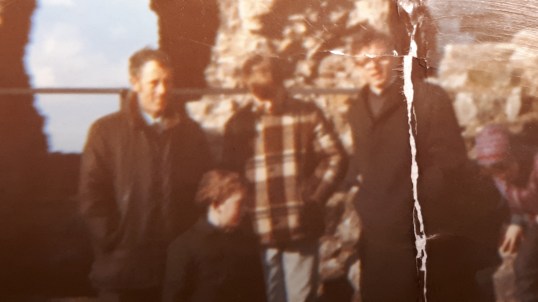
Attached to this posting is a photograph of the Comboni Missionary Romano Nardo with my family and myself. I came across it when my mother was sorting through her box of old pictures.

It was taken on a family day out to Llangollen Castle during Nardo’s stay with my family during the Easter of 1970. I am the child that is looking at the floor.

When I look back and think about Nardo’s visit that Easter, I recall – not that I gave it much thought at the time – that it created a difficult and uncomfortable atmosphere for my parents, especially my dad.

I had gone to Mirfield the previous September, as a lively, gregarious, playful, outdoor and mischievous child and returned home, with Nardo, during the Easter holidays of 1970, a subdued, unresponsive and – in my parents eyes – a completely different and unrecognizable son.

During the holiday I had little interest in my parents or my siblings. All I wanted was to spend time with Nardo; to the extent that I was awoken by him in the morning so that we could pray the morning breviary prayers together. The same took place in the evening for the evening prayers and vespers – we had to say them together. I found out later – through a statement that my eldest sister had given to lawyers – that my dad had found Nardo’s behaviour towards me both alarming and sinister.

On the occasion when I was sick and in bed, Nardo had asked if he could go upstairs and (for want of a better word) “comfort” me. It must have seemed a strange request. However, Nardo was a priest, what harm could it do. What harm indeed.

That very evening my mother’s chest must have swelled with pride as Nardo said mass – as he did everyday that he was with us – in our front lounge. My mum had a Comboni priest saying mass for her husband and her sons and daughters, here, right in her own house. A Comboni priest. A priest of the same order that she hoped and prayed her son would one day belong to.

Nardo did not only groom me for his own sexual gratification, he groomed and abused all my family through gaining their trust and using their hospitality as a means of sexually abusing me.

I am one of many seminarians at Mirfield that had their trust abused. My family is one of many families that had their trust in the Comboni Missionaries abused.

Mark Murray

20170927_221423

WHY POTPOURRI DOESN’T HELP THE VATICAN. By Brian Mark Hennessy

WHY POTPOURRI DOESN’T HELP THE VATICAN

Some time has passed now since the “Boston Globe” of “Spotlight” fame founded the Catholic Newspaper “Crux”. It was hoped that “Crux” would inherit both the tradition and financial success of reporting on Catholic issues that had launched its parent publication to world-wide renown. Whilst I do trawl routinely through its pages – and it has a readership quorum that clearly sustains it financially – the current “Crux” agenda is not for me. For example, very recently in the middle of September and in Rome, J R Allen wrote the article, ”A Potpourri of Nuggets…” – because there was no “grand narrative” to report from the Vatican. Much of what followed appeared to be anecdotal trivia to fill in the column space. The image that immediately jumped to mind was that of the Emperor Nero playing the fiddle whilst Rome burned for six days and rendered 70% of the population homeless.
Sometimes today, both “Crux” (which I am using as an example and not as the sole focus) and a number of other Catholic news journals appear to lack essential focus and critical reporting and have become merely reflective mouthpieces of the Vatican Fides News Agency. The Catholic Church, however, is much larger than the iconic marbled palaces of Rome and it is essential for healthy debate for worldwide Catholic opinions to flow into the Vatican as well as dictats to come out of it.
For example, one matter that is long overdue is the cerebral Reformation within the Catholic Church Vatican Curia. Currently, it is stuck in the muddy ruts of age-old denial and senility on many issues – including sexuality, child sexual abuse, birth control, celibacy, pre-marital sex and the role of women in the Church – the list is almost endless. Those are all issues in which the Catholic Laity have a rightful voice. The early Church, at least in the first three centuries, was a family where everyone had a rightful say and it should be thus today. Roots are important and should never be forgotten because the continued growth of any tree depends on them.
The “Crux” birth-right tradition was to be in the vanguard of serious debate, but lately it appears to have slipped into the rear-guard position of the Vatican, which it meekly follows at a distance. “Potpourri” was symptomatic of a decline in “Crux” focus and journalism. If it routinely becomes a magazine-type mouthpiece of the Vatican, rather than a platform for vibrant debate on the important issues confronting a Church (which is in a goodly degree of turmoil) it may indicate that the “vision” and “ethos” of “Crux” is being misdirected. The same goes for every other Catholic news outlet.
That would be especially damaging in the broader context that the Roman clerical edifice is unwilling to respond routinely in any adequate way to justified criticism on a range of very serious issues. Some of those issues, for example dangerous levels of over-population in a world with diminishing resources, are not going to be resolved, either in practice nor adequately, by age-old dogmatic Vatican responses such as sexual abstinence or “coitus interruptus”. Nor is clerical child sexual abuse going to be solved by sending clerics to clinics or sanatoriums – or whatever they are labeled – to effect a “cure”. That is still the practice in Italy and many other countries. There is no adequate cure for psychosexual immaturity or dysfunctionality that could risk clerics with a past history of a sexual proclivity for children to be reinstated to positions in which children are accessible. Nevertheless, appallingly, that still happens.
The “Boston Globe” revelations on clerical child abuse stunned America, the Vatican and the world. It was a dramatic moment in the history of Catholicism. This last week, whilst “Crux” readers were engaged in “Potpourri”, Vatican failures associated with the curtailment and management of clerical child sexual abuse had not been dispersed into oblivion. The trauma and suffering of victims remained. It never becomes a figment of their imagination. Those victims, their families, parents and counselors are engaged with it on a daily basis. Sadly, too, the sexual abuse of children in Church institutions continues apace, as does clerical denial and the concealment of crimes and failures to bring the clerical offenders to justice.
Clerical child sexual abuse may be an old story, but it is not a “done topic”. Yet, many Catholic news outlets, not just “Crux”, rarely mention these issues at all today – except in passing in an inch of column space. Nor, within the seemingly impenetrable walls of its subconscious, has the Vatican, in the totality of its separate Congregations, put the essential measures in place to effectively understand, manage, contain or curtail the problem.
That is not to say that there is not a willingness on the part of some in the Vatican to drag the Church out of its historical blindness on such issues, but the action of just a few is clearly not gaining ground against the entrenched, generational myopia of clerics not used to being under daily, critical scrutiny and re-assessment. Yes, procedures exist, Canons remain in place, Diocesan Child Safeguarding Rules are held by all, statistics are published for public consumption.
That is all good, but in the corridors of the Vatican Curia Congregations, the age-old historical culture and pervasive clerical mind-set remains intact – as does a defiant reluctance to bare the breast and own up, with humility, that their greatest sin has always been and remains to this day one of arrogance. That arrogance was never more publicly evident than when Cardinal Gerhard Ludwig Muller publicly defended his Congregation’s policy of refusing to reply to the letters received from the Victims of child sexual abuse. That is not ancient history. It was in February of this year!
What that incident tells us is that for the impersonal Congregation of the Doctrine of the Faith in the Vatican Curia each new letter from a Victim is merely a statistic. It is placed in a growing pile and it is not valued with a response. I can relate to that personally. It is over eighteen months since I forwarded them a document that had calculated that something in the region of 1000 crimes of sexual abuse against child seminarians had occurred at the Comboni Missionary Order’s seminary at Mirfield in England. My expectations of some action were high for my volunteer courier was none other than the Cardinal Archbishop of Westminster who had placed that powerful and revealing document (indeed I considered it to be “explosive”) with them “by hand” personally. There has been no response – it clearly did not give rise even to a low, plaintive “whimper”.
There is an emotional dimension for parents also in this debate – not just the victims themselves. When I eventually told my eighty-year old widowed mother of the abuse that I had undergone at that seminary, the reaction was shock, dismay, remorse, confusion, helplessness and disbelief. It was such an emotional and physical response that I had to leap to her side to steady her, sit her down, comfort her and reassure her. She then mourned for the passing of my father, whom she assured me would have confronted that Order and immediately withdrawn me from their “care” – “if only he had known”. I wished at that moment that I had never told her.
Historically, the Laity of the Catholic Church has always been overlooked by the Vatican Curia. All rules and edicts have been handed down for observance – often with the threat of serious interdicts for any failure to comply. However, the Laity of the Catholic Church out-number clerics by about 1000:1 and, hence, has on tap a staggering amount of collective brain power, energy and good will. Moreover, probably unbeknown to most of the Laity, under Canon Law itself, both clerics and laity are regarded as “equal”: “Flowing from their rebirth in Christ, there is a genuine equality of dignity and action among all of Christ’s faithful”. Indeed, in the early Christian Church both slave and master sat around the same table in the breaking of the bread. For one and a half millennia now – they have been excluded. So from where did the arrogance of clerics spring?
That begs the question also, “How is it that Clerics make the Rules about how our child victims and their child-abusing clerics are managed?” The Laity have not been asked in any meaningful and fully inclusive way about the formulation of the Rules to deal with it and curtail it. Most likely, nor has the Vatican Curia, historically, believed that they needed to ask the Laity anyway. Hopefully, a most recent Vatican announcement by Cardinal Gracias – to the effect that more Lay involvement in the issues of the Catholic Church is to be sought – might be the start of a reversal of the historical “Fortress Vatican” obsession.
Alarmingly, a recent Australian study* of child sexual abuse in the Catholic Church has compiled the findings of some twenty-six commissions, investigations, judicial probes, and academic research from around the world. It has warned that there remains a grave potential for abuse of children to continue unchecked in the estimated 9,600 orphanages that the Catholic Church still runs. Worryingly, the report also states that there is no sign at the Vatican level of Religious Leaders answering why abuse has happened on such a scale and why they have reacted so poorly. In that context, the authors of the report, maintain that at some time in the future more shocking levels of the abuse of children will be unmasked.
*(Professor Cahill and theologian Dr Peter Wilkinson: Child Sexual Abuse in the Catholic Church)
.
The Catholic Church, like any global organization (whether political, religious or commercial) does not have all the world’s wisdom on tap. It is a vulnerable, human organization that imperfectly seeks to represent “Goodness” in this world. Thus the realism of critical, powerful and far reaching “alternative voices” is essential to keep the Vatican on track so that it can again move forward. Left to itself an isolated Vatican will become not just short-sighted and “tone” deaf, but both blind and “stone” deaf.
It is particularly essential that all Catholic news outlets, continue to project critical challenges on the issues surrounding child sexual abuse to organizations such as the Roman Catholic Church – which because of its historic claims of being a major moral force in this world – have lost the most credibility. The media should not fear recrimination because it is not the “Faith” of the Catholic Church that is under fire in this debate. The debate is something more humanly tangible than “Faith” and it gives the Laity the right of liberty to be critical. What is at stake here, is not the Vatican’s coveted monopoly of Gospel interpretation, but it is the universally held ethical essence of “Morality” and of “Truth” and of “Justice”. Full and open discussion of issues relating to those core values is vitally essential for the stability of the Catholic Church – let alone a World Order that is increasingly subject to the rampages of the instant global communication of unethical ideologies which have alarming claims of being the new normality. Before we tackle those new issues, however, we must tackle the old reality.
The issue of the clerical sexual abuse of children has demonstrated just how vulnerable the Roman Catholic Church is to its “mightier than thou” arrogance and it has literally “fallen from grace” as did Adam. It has been expelled from Eden and no fig leaf can now hide its nakedness. In many respects the Vatican Curia has been blinded by its own adherence to history and tradition and it does not recognize how shockingly and unacceptably Medieval it remains. To maintain any semblance of occupying the “high ground” in a world, increasingly aware of universal rights – and simply to be seen to adhere to its own principles such as Matthew’s Gospel, “And why beholdest thou the mote in thy brother’s eye, but not considerest the beam that is in thine own eye” – it needs to re-examine its own soul.
More precisely, what that means in the case of the Roman Catholic Church, which is often drowning unconsciously in its own incomprehension of its waywardness, is that that institution must reflect upon and eliminate its unacceptable and damaging practices that amount to “Immorality”, “Insincerity” and “Injustice”.
It is the immorality, insincerity and injustice of silence, of a failure to listen to victims, a failure to respond to victims and of a failure to demonstrate unchallenged ownership of each specific crime that takes place within the totality of Catholic Institutions.
of secret proceedings for accused clerics and religious – of proceedings that routinely exclude victims, witnesses, the public and the press from hearings – and of proceedings which publish no findings.
of secret proceedings that bind victims and witnesses who are admitted to them by oaths of perpetual silence on pain of threatened interdicts and excommunication from the Church.
of a failure to punish criminal clerics and religious appropriately and in line with the reasonable, common and universal expectations of the processes of civil laws and civil punishments, but instead routinely provides clerics found guilty of crimes with ecclesiastical or civil pensionable retirement.
of a failure to prevent clerics and religious found guilty of child abuse from all future interaction with children, of a failure to impose automatic interdicts upon abusive clerics and religious and of a failure, in many cases, to subject them to the process of defrocking.
of a failure to bring to account all clerics and religious who seek to conceal reports of crimes of any cleric or religious of any rank – whether they are priests, nuns, brothers, Bishops, Abbots or Superiors General in the Catholic Church.
of the failure to bring to account all clerics and religious who seek to hide within their walls those who have committed crimes against children – and who conspire to move those clerics or religious, as soon as discovered, to an alternative locations so to ensure that the legitimate processes of civil arraignment are forestalled or prevented.
of the failure to notify to civil law authorities or Child Safeguarding Organisations, as appropriate, those clerics who are known to have committed offences against children and against the civil law of the country in which they reside.
That Litany of failures – and, regrettably, many more not mentioned here merely for lack of space – constitutes the immoral, insincere and unjust failures of the Catholic Institutions. These are the failures for which the voices of both the people of God and no God in this world demand a re-birth – a true and “in depth” fundamental “renaissance” of Catholic Institutions and the minutiae of their “modus operandi”.
That Litany of failures is nothing short of a list of the standard features of feudal, monocratic structures – and are more akin to the control tactics of the despotic Medieval Monarchs and Roman Emperors of bygone history than a spiritually refreshing flower of hope for the future in a desperate world that is thoughtlessly rushing towards self-extinction.
The media voices, which comment on the Catholic Church, must engage in debate and re-iterate failures unceasingly and vigorously to the Catholic Church for the public good. Humoring readers with “potpourri” because there is no grand narrative from the Vatican news outlet on the day is not just frivolity, but it is a dangerous state of detachment from reality and it will quicken the demise of Catholicism as a moral force for good.
Brian Mark Hennessy.
Blog: Comboni Missionaries – a Childhood in their Hands
(URL: https://veronafathersmirfield.com/)


COMBONI MISSIONARIES AND THE BETRAYAL OF TRUST

TO THE COMBONI MISSIONARIES:

My wife, Julie, and i took our eldest son to University on Saturday.

It was a big day for us.

However, I gave it little thought during the days and weeks leading up to it.
Today, the house is a little empty, and in some ways it feels as if i have experienced a bereavement.

My son has gone. He has left the security and love, that was, literally, on his very own doorstep, to continue his journey in the world, with all the happiness and sorrows and challenges that that may bring.

The day ended up being a difficult day. Julie and I were not prepared for the emotions and thoughts and the overwhelming feeling of love and pride that rushed through us as we said good bye to our son

Soon after that good bye I began to think about my goodbye to my parents and their good bye to me when I was taken to Mirfield, at the age of thirteen, to begin my own journey towards becoming a priest.

My parents, I suspect, must have had the same thoughts and feelings of love and pride for me leaving home as Julie and I did for my son on Saturday leaving his home and going to university.

I was thirteen. How could my mum and dad do it?

How could they “let go” and leave me when I was so young?

The answer, of course, is based around trust. My parents believed that God had called me. They
believed in the sanctity of the Holy Vocation to the Priesthood. “God chose you, you did not choose
Him”

My parents trusted the Catholic Church. They trusted the priests of the Catholic Church. My parents, more than any other priests, trusted the Comboni Priests at their Junior Seminary at Mirfield.

I am angry about that. I am angry that i still feel angry. And I am angry for my mum and dad.

If my parents were alive they would be more than angry about what happened to their son at the hands of their trusted Comboni priests of Mirfield.

After the last Mirfield reunion (which I did not attend) I telephoned, the Comboni Missionary, Father John Clarke. Because, Father Clarke had spent some time at the reunion talking with Comboni abuse survivors, i was interested to discuss the abuse at Mirfield with him. Father Clarke was, and may still be, the Comboni Safeguarding Coordinator. His response to my question was, in words similar to or the same as, can you put all this in the past now, and move on.

Why am I writing all this?

I am writing this because it is linked to my thoughts and feelings about my eldest son leaving home, and it is linked to the trust that is entwined within that.

Many children went to Mirfield on trust. Their families trusted the Comboni priests at Mirfield to protect their children and to keep them from all harm.

That trust was betrayed in the most awful and despicable way. And to this day the abuse at Mirfield has not been addressed. And to this day there is no guarantee that it will ever be addressed or that the abuse by Comboni priests will not happen again.

And so, no, I and many others cannot “put it all in the past and move on.”

Mark Murray

Worst of Catholic Sexual Abuse Scandal Still to Come in Developing World

Worst of Catholic Sexual Abuse Scandal Still to Come in Developing World
A Report by Andrew West for the Religion and Ethics Report for ABC –
The Australian Broadcasting News

The worst of the Catholic sexual abuse scandal may be over in Australia, but the crisis is likely to hit the church in Asia, Africa and parts of Europe within a decade, a report has warned. Children and teenagers in church-run orphanages are at serious risk of abuse, the report says.

The study, “Child Sexual Abuse in the Catholic Church”, has for the first time compiled the findings of 26 Royal Commissions, police investigations, judicial probes, government inquiries, church studies, and academic research from around the world since 1985.

The Report warns the gravest potential for future abuse of children and teenagers lies in the estimated 9,600 orphanages the church still runs, including 2,600 in India and 1,600 in Italy.

“Child sexual abuse has peaked and there has been a decline since the late 70s and early 80s and that’s because it’s been brought into the public arena,” the study’s co-author, Professor Des Cahill, a former Catholic priest academic, said. “But I think in the developing countries and in some of the European countries, there hasn’t been a precipitating event to raise the issue into the public arena and I’m thinking particularly of countries in Asia and Africa. The issue may reassert itself after the current crisis has all blown over, and may come back in 30 or 40 years’ time if the underlying issues are not addressed”. He continued,
“As yet I have not seen any sign at the Vatican level, and even here in Australia, of the bishops answering why this happened and why they, the bishops, reacted so poorly.”

Examining reports from Australia, Ireland, the United States, Great Britain, Canada and the Netherlands, Professor Cahill and his co-author, theologian Peter Wilkinson, found that one in 15 priests, or about 7 per cent, allegedly abused children and teenagers between about 1950 and 2000. They say that even today children “are at risk in education and welfare institutions when they can be accessed by psychosexually immature and/or sexually deprived celibates, including priests and religious brothers”.

However, Professor Cahill, who was an adviser to the Australian Royal Commission into Institutional Child Sexual Abuse, believes the risks to children in Australian Catholic schools are now very low, mainly because of greater vigilance by parents, teachers and school authorities. He said that most Catholic school principals now are married men and women, and are extremely conscious of the risks to children. The decision of the Catholic Church in Australia, the US, Britain, New Zealand and Canada to phase out a large numbers of orphanages and move children into foster care has also substantially reduced the risk of abuse.

However, controversially the report of the Australian Royal Commission warns that Australia’s reliance on overseas trained clergy — up to 40 per cent in some dioceses — could be risky, as overseas bishops may try to banish offending or suspect priests to foreign postings.

“Is the phenomenon of child sexual abuse by priests and religious brothers likely to reappear and increase in the short or long term?” the report asks. “The answer is unclear. It might happen, despite even the most stringent checks that an offending priest or religious might be recycled to Australia. In the US, not a few overseas priests, especially from the Philippines and India, have been charged and convicted.”

The shortage of local candidates for the priesthood in many Western countries has, in the past, also led bishops to ordain men despite warnings from the heads of seminaries and training colleges that they were unsuitable. These included “psychosexually immature, psychosexually maldeveloped and sexually deprived and deeply frustrated male priests and religious, particularly those who had not satisfactorily resolved their own sexual identity”.

However, Professor Cahill and Dr Wilkinson do not blame the abuse crisis entirely on celibacy, but their report notes that there are low levels of abuse in the eastern rite Catholic churches — particularly the Maronite, Ukrainian, Melkite and Chaldean churches — where priests are allowed to marry and become fathers.

He rejects the claim, often made by church conservatives, that the liberal reforms of the Second Vatican Council in the early 1960s loosened the morals of priests. “Much of the abuse happened before Vatican II, during the 1950s and into the 1960s,” he said, “And the majority of offending priests were either ordained before Vatican II or well progressed in their studies. I think we need to be suspicious of those explanations.

—————————————————————————————————————-

(The Report above was Paraphrased for the Blog “The Comboni Missionary Order – A Childhood in their Hands” by Brian Mark Hennessy who has made further comments below).

The above report by Professor Cahill and Dr Wilkinson emphasizes a number of points that the Combini Survivors of child sexual abuse have been making to the United Kingdom Independent Inquiry into Child Sexual Abuse. Notably, that within the Catholic Church, children today are most at risk of being sexually abused and mistreated at the hands of clerics in the Religious Institutes and Orders of the Church that cater for the educational, health, welfare, youth and missionary programmes that they operate in developing countries.

Regrettably, it is known that in the past clerics who have abused children are known to have been posted to overseas locations by their Religious Superiors to remove them from the oversight of civil welfare and judicial organizations in the developed world where the issues surrounding child sexual abuse are better understood, and monitored – and where clerical abusers are more likely to face the prospect of being identified and prosecuted.

Retain Abuse Survivors in the Pontifical Commission  Or Risk Irrelevancy

Retain Abuse Survivors in the Pontifical Commission  Or Risk Irrelevancy
(Brian Mark Hennessy has paraphrased this Editorial which appeared in the National Catholic Reporter (NCR) on 1st September 2017 – and provided additional comments below).
____________________________________________________________
It is distressing to learn that the Pontifical Commission for the Protection of Minors may be restructured so that survivors of sexual abuse by clergy may have no direct voice in that body. The commission has helped the church make great strides in addressing this global issue, but it is in danger of becoming irrelevant. Signs of trouble with the commission began to surface in 2016, a year after its inception, when one of two abuse survivors on the commission, Peter Saunders, was suspended. The trouble became acute when the sole remaining survivor on the commission, Marie Collins, resigned earlier this year. Collins resigned because she felt Vatican bureaucracy was neglecting and stalling the work of the commission. The commission is understaffed, underfunded and not accepted by offices at the Vatican that should be working with it, Collins said.
In 2015, Pope Francis announced the creation of this commission. At that time, NCR said:
“It is a new phase in the abuse crisis. For the first time, there is clear evidence that the people’s cry for justice and action has reached the Pope and his closest advisers.”
We were then told that, on the recommendation of the Pope’s nine-member Council of Cardinals, a Tribunal would be established to charge bishops of “abuse of office” when they mishandled cases concerning the sexual abuse of children. At that time, NCR said:
“Never before has the language describing the mishandling of these cases by bishops, and, by extension, their diocesan officers, been so strong.”
Regrettably, that Tribunal never came to be. We have now been told, two years later, that what was announced was not an “approved plan”, but was rather the “enthusiastic encouragement” from the Pope to begin a discussion of possibilities. Is this not a further example of the same intransigence and obfuscation that drove Collins from the commission?
“Why in the world would anyone, including pontifical commission members, think that a papal announcement which said one thing actually meant another?” NCR now asks.
“Why has it taken two years for this clarification to be given?” NCR now asks.
The Pontifical Commission for the Protection of Minors began well and has made huge contributions in educating Catholics across the globe about the issue of abuse of minors and vulnerable adults. It has given many people the tools to address the issue. The job entrusted to the commission is too important to the life of the church to allow the body to fade into irrelevance. To prevent irrelevancy, the commission must ensure that survivors have direct participation in its work – and the commission itself needs a strong, public endorsement by Francis.
__________________________________________________________________

Comments by Brian Mark Hennessy
Survivors of Child Sexual Abuse at the hands of the Comboni Missionary Order fully endorse the National Catholic Reporter in their historic struggle to bring both those clergy who have abused children to account and, additionally, also those members of the Catholic Hierarchy who have failed in their Christian and Civil duties by protecting and shielding those same child-abusing clerics from justice.
Indeed rather than abandoning the original very clearly expressed wishes of Pope Francis to establish a Tribunal, the Comboni Survivors of child sexual abuse at the hands of the members of the Comboni Missionary Order declare emphatically that the promised Vatican Tribunals should be extended to charge all Superior Generals, Provincial Superiors and Local Superiors who have similarly covered up crimes of child sexual abuse by clerics under their governance – and have protected those perpetrators of such heinous criminality from Justice.
It is abundantly clear that the members of the Lay Catholic Church, who, as baptized Catholics, are equal in Canon Law to the Ordained Clergy of the Church, demand this. The Vatican will continue to be regarded as errant, pretentious, dysfunctional, and increasingly irrelevant whilst severe and appropriate justice for child abusers and those who protect them is outrageously ignored by Vatican, Diocesan and Religious Clerics.
__________________________________________________________

Cardinal Murphy O’Connor’s Cover-up of Child Abusers Must be a Lesson to the Catholic Church by Keith Porteous Wood

Cardinal Murphy O’Connor’s Cover-up of Child Abusers Must be a Lesson to the Catholic Church

by: Keith PorteousWood

Note: This Article by Keith Porteous Wood first appeared in Conatus News and was later posted in the National Secular Society’s publication “Newsline” on the 8th September 2017. Cormac Murphy O’Connor, the former Archbishop of Westminster, died on 1 September. National Secular Society executive director Keith Porteous Wood seeks to set the historical record straight with this alternative obituary below. However, the views expressed in the article below by Keith Porteous Wood are those of himself, the author, and do not necessarily represent the views of this Blog entitled – “Comboni Missionaries – A Childhood in their Hands”
______________________________________________________________________________________

The death of Cardinal Cormac Murphy O’Connor has understandably resulted in obituaries lauding his achievements as a Prince of the Catholic Church. But we are pleased that few ignore entirely the Cardinal’s involvement in one of the most scandalous child abuse cover-ups this country has seen. I don’t doubt for a moment that Cardinal Murphy O’Connor did some good in his life, but there was another side to his story that should not be forgotten – a side that resulted in pain and suffering for many children. And the ruthless campaign by the Church to repress the details of the Cardinal’s many errors and misjudgements, and worse.
Despite the image of a genial old buffer that the Cardinal liked to project, it did not stop him, in 2006, from sacking his talented press secretary, a lay position, simply because he was “openly gay”. And O’Connor was “firmly against the repeal of Clause 28, which banned the promotion of homosexuality in schools”, a repressive and vindictive measure now regarded with embarrassment. This, despite the prevalence of gay men in the priesthood.

Those with long memories will also remember that, following complaints from parents, O’Connor, when Bishop of Arundel and Brighton, moved a known serial practising paedophile cleric, Michael Hill, from unsuspecting parish to unsuspecting parish. If O’Connor’s objective had been to reward Hill by affording him the greatest possible opportunities to prey on an almost unlimited supply of vulnerable unaccompanied juveniles, some of them thousands of miles from their parents, he could have done no better than appoint Hill as Catholic chaplain at Gatwick Airport. Yet this is exactly what O’Connor did, despite his knowledge of Hill’s repeat offending and psychiatric reports that Hill was likely to re-offend. Needless to say, O’Connor never shared what he knew about Hill’s criminal abusive activities with the police, contributing directly to Hill’s ability to continue his orgy of abuse unhindered. Hill was eventually convicted and jailed in two separate trials for abusing a boy with learning difficulties at the Airport, as well as eight other boys. Ten further charges unaccountably “remain on file”. To his dying day, the best Murphy O’Connor could do in his mea culpa on Hill was to say his response was “inadequate but not irresponsible”. Not much consolation to the victims and their families. Nor will have been the self-righteous indignation of his pitiful response to criticism: “Inevitably mistakes have been made in the past; but not for want of trying to take the right and best course of action.”

Richard Scorer, abuse lawyer and NSS director, examined the Hill saga exhaustively in his book Betrayed: The English Catholic Church and the Sex Abuse Crisis and demonstrated beyond doubt that O’Connor’s claims about Michael Hill were completely baseless. And, so predictably, O’Connor’s affable mask slipped again and he got pretty vicious when the media started asking what were, to his mind, too many questions and getting too close to the uncomfortable truth. It is an open secret that the BBC was muzzled from pursuing its investigative work on O’Connor by top-level representations made by O’Connor.

Few if any others than O’Connor could have managed to intimidate the BBC into silence, yet having done so, O’Connor still had the gall to claim that there was an anti-Catholic bias in the media. He wrote: “Many others feel deeply concerned by the apparently relentless attack by parts of the media on their faith and on the church in which they continue to believe.” That old trick so well practised by the Catholic hierarchy: portraying itself as the victim. That would all be shocking enough, yet there is credible speculation that the Hill saga could have been just the visible tip of the iceberg. A 2012/3 report by the group Stop Church Sexual Abuse has speculated that: “[Anglican] clergy … seem to have worked together with priests from [O’Connor’s] Catholic Diocese of Arundel and Brighton … to abuse children. Reports include that of a Catholic priest who had multiple reports for alleged child sex offences and who was moved by the Catholic Bishop [O’Connor] over to the CoE diocese of Chichester and became an Anglican Minister.

“The relationship between the [Catholic] Diocese of Arundel and Brighton [O’Connor’s] and [the Anglican one of] Chichester [in which Peter Ball, mentioned below, ministered] has been historically close. In the 1980s Bishops Cormac Murphy O’Connor and Peter Ball [not imprisoned until 2015 on multiple counts of sexual abuse committed over twenty years earlier] were close friends and it is now [claimed] that both sat on multiple reports of child sexual abuse by clergy and did nothing to protect children from further abuse. “In total upwards of 17 Anglican and 19 Catholic clergy have been reported to have abused children up to the late 1990s within these Dioceses. Most lived and/or worked within one small geographic area which adds to the concern that there [may have been] a network of sex offenders shoaling for victims within church communities, schools, cathedrals, youth groups and scouting groups.” (See also Addendum by Brian Mark Hennessy below)
Even the Daily Telegraph reported police investigations into “claims that O’Connor hampered Hill’s prosecution” and if the claims above are correct about O’Connor’s close friendship and nefarious collaboration with the devious and mendacious Peter Ball, who escaped justice for decades, this does not seem in the least far-fetched. At least, however, O’Connor is still indelibly connected in the public’s mind with the disgraceful Michael Hill saga, having been widely reported including in The Times, with severe criticisms including “Victims’ groups demanded his resignation in 2002”.

The Church could not but have known very much more. But the process of rewriting history is no doubt in full progress. Does it not however speak volumes about the Pope and Catholic Church that, given all the above, they chose, out of all the possible candidates, “His Eminence Cardinal” Cormac Murphy O’Connor to be a cardinal, to be the most senior Catholic in England and Wales, to be Emeritus Archbishop of Westminster, and to be the Pope’s Apostolic Visitor to investigate clerical child abuse in the Archdiocese of Armagh? But maybe we should not be surprised. The Pope tellingly did not strip O’Connor’s fellow Cardinal in Scotland, Keith O’Brien, of his cardinal’s biretta for abusing his rank with decades of predatory sexual sackable offence.

It seems from the Gibb Report into disgraced former Bishop Ball that Sussex police appear to have done a workman-like job on abuse in the Anglican diocese. I would have suggested that the Sussex Police now turn their attention to the Catholic diocese, but unfortunately the CPS told them in 2003 to abandon the investigation whilst refusing to explain why. Hopefully this was not because of O’Connor’s clerical rank, just like the Cof E’s Report suggested Peter Ball’s cleric rank was the reason he escaped justice in 1993.
_________________________________________________________________________________

ADDENDUM

Comments related to the above article by Brian Mark Hennessy:

From the 1960s to the 1990s the Chichester had some of the worst examples of child sexual abuse committed by priests. The numbers and the scope of the phenomenon were truly outstanding. Canon Gordon Ridout who was the Vicar of All Saints in Eastbourne was jailed for 10 years for 36 separate offences on 16 children between 1962 and 1973. Peter Ball, former Bishop of Lewes was convicted of abuse in the 1980s and 1990s. Former priest Keith Wilke Denford of Burgess Hill and organist Michael Mytton were convicted of historic sexual abuse. Vickery House, a former Brighton priest, was also convicted along with former vicar of Brede, Roy Cotton. Additionally, former Vicar of St Barnabas in Bexhill was charged and convicted of historic allegations.


Note By Brian Mark Hennessy:

Coincidentally and unrelated to the above article, it may be of interest to some readers that Father Herbert Brazier, the father of the Prime Minister, Theresa May, was an Anglo Catholic Priest serving in the diocese of Chichester as the Eastbourne Hospital Chaplain from 1953 to 1959, during which period he met Theresa May’s mother. Earlier, at the beginning of World War II he had attended the Community of the Resurrection at Mirfield where he trained for the Anglo Catholic priesthood. In the 1960’s and 70’s clerics and seminarians of the Comboni Missionary Order at Roe Head had very cordial relations with the Resurrection Community and on occasions exchanged visits. I remember one such visit well. I had a chat with a Priest of the Resurrection Community in their extensive library. He had spotted a book in the library that he wanted to read – and was in the process of learning Hebrew first so that he could do so!
__________________________________________________________________________________________